Milei Renews Argentina's Falklands Claim at the UN
Javier Milei Renews Argentina’s Falklands Claim at the United Nations
Introduction: Javier Milei’s Falklands Declaration at the United Nations
Argentine President Javier Milei addressed the United Nations General Assembly to reaffirm Argentina’s historical claim of sovereignty over the Falkland Islands (Islas Malvinas), South Georgia, and the South Sandwich Islands. Milei emphasized a commitment to achieving a peaceful, negotiated solution with the United Kingdom Source 1.
The speech marked a key moment in Argentina’s foreign policy under the libertarian administration. While maintaining the nation’s constitutional mandate regarding territorial integrity, Milei departed from the adversarial rhetoric of prior administrations. The declaration balances long-standing sovereignty goals with an agenda aimed at integrating Argentina into Western economic and security frameworks Source 3.
+-------------------------------------------------------------------------+
|                  MILEI'S DIPLOMATIC FRAMEWORK AT THE UN                 |
+-------------------------------------------------------------------------+
|  1. Constitutional Claim    -->  Uphold sovereignty over Malvinas       |
|  2. Conflict Resolution     -->  Commitment to strictly peaceful means  |
|  3. Strategic Realignment   -->  Integration with Western allies (US/UK)|
|  4. Bilateral Engagement    -->  Long-term pragmatic negotiation track  |
+-------------------------------------------------------------------------+
Javier Milei’s Speech at the UN General Assembly
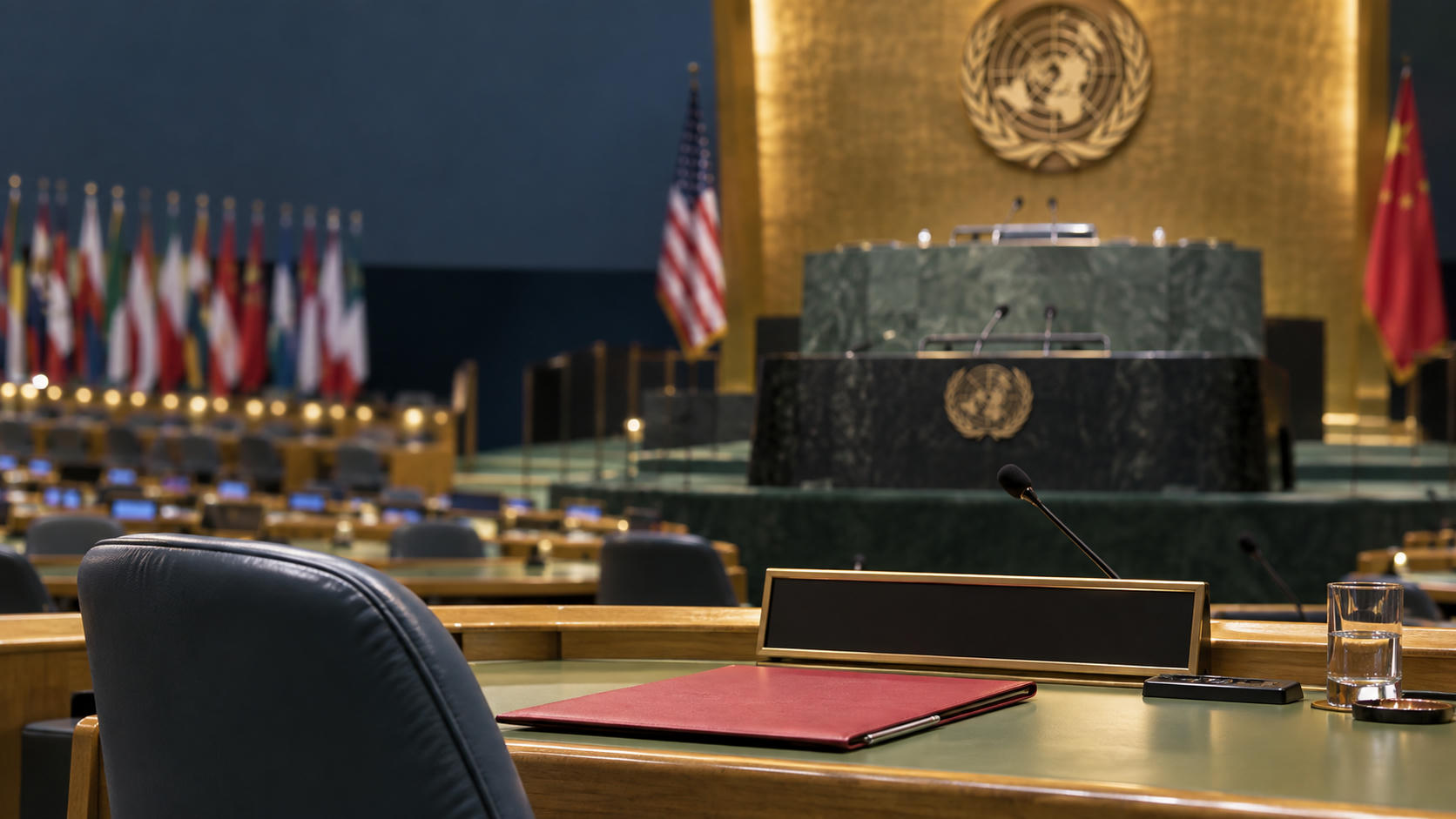
During the annual general debate of the UN General Assembly in New York, Javier Milei presented his administration’s global doctrine. His remarks combined free-market advocacy, critique of globalist regulatory bodies, and traditional Argentine territorial claims.
Milei positioned Argentina as an active participant in international law, stating that the recovery of the islands must occur through diplomatic channels Source 1. The administration framed the dispute as a bilateral issue that requires structured dialogue rather than international posturing.
Key Highlights and Statements from the UN Address
Milei reiterated that Argentina’s claim to the South Atlantic islands remains an enduring national objective Source 3. The primary points delivered before the assembly included:
- Reaffirmation of Argentine sovereignty over the Malvinas, South Georgia, and South Sandwich Islands and the surrounding maritime areas.
- An explicit call for a peaceful, mature dialogue with the United Kingdom to resolve the dispute.
- Support for the peaceful settlement mechanisms defined by the United Nations Charter.
- A rejection of unilateral resource extraction and military escalation in the disputed zone.
Milei’s address highlighted that national sovereignty claims do not preclude commercial, strategic, and diplomatic engagement with the British government.
Reaffirming Argentina’s Constitutional Mandate
The Argentine claim over the Malvinas is enshrined in the First Transitory Provision of the 1994 Argentine Constitution. The provision establishes:
“The Argentine Nation ratifies its legitimate and imprescriptible sovereignty over the Malvinas, South Georgia, and South Sandwich Islands and the corresponding maritime and insular areas, being an integral part of the national territory. The recovery of said territories and the full exercise of sovereignty, respectful of the way of life of their inhabitants and according to the principles of international law, represent a permanent and unrenounceable objective of the Argentine people.”
Milei’s address adhered to this constitutional baseline. His foreign policy aligns state policy on territorial claims with a free-market, pro-trade posture toward Western democracies.
Diplomatic Strategy: The Call for a “Peaceful Solution”
Milei’s diplomatic strategy is defined by pragmatic diplomacy. The administration avoids confrontational trade measures, aggressive maritime rhetoric, or symbolic diplomatic boycotts, focusing instead on long-term institutional engagement.
                      ARGENTINE DIPLOMATIC APPROACHES

      Kirchner / Fernández Era               Javier Milei Administration
   +----------------------------+          +-----------------------------+
   | - Confrontational rhetoric |          | - Pragmatic engagement      |
   | - Multilateral pressure    |    VS    | - Bilateral negotiations    |
   | - Revocation of pacts      |          | - Hong Kong-style model     |
   | - Alignment with East/BRICS|          | - Alignment with US/UK/NATO |
   +----------------------------+          +-----------------------------+
Moving Beyond Confrontational Rhetoric
Previous administrations, including those of Cristina Fernández de Kirchner and Alberto Fernández, utilized sharp diplomatic challenges against London. Actions included:
- Canceling the 2016 Foradori-Duncan pact on joint resource coordination.
- Enforcing legal sanctions against international companies exploring offshore oil in the Malvinas basin.
- Employing aggressive rhetoric in multilateral summits such as CELAC, the G77, and Mercosur.
Milei has adopted an alternative framework, previously citing the peaceful, multi-decade negotiation process that led to the 1997 handover of Hong Kong from the United Kingdom to China. This model relies on structured bilateral negotiations, economic cooperation, and long-term transitional agreements that respect the interests of local populations.
Current State of UK–Argentina Bilateral Relations
Bilateral relations between London and Buenos Aires have warmed under Milei. British Foreign Secretary David Cameron met with Milei at the World Economic Forum in Davos, marking the highest-level bilateral discussion between the two countries in years.
+-----------------------------------------------------------------------+
|                 AREAS OF EXPANDING UK-ARGENTINA DIALOGUE              |
+-----------------------------------------------------------------------+
|  Economic Reform       |  Bilateral trade, mining investments, energy |
|  Security & Defense    |  Intelligence sharing, naval cooperation     |
|  Scientific Access     |  Antarctic logistics, research collaboration |
|  Humanitarian Missions |  DNA identification of fallen 1982 soldiers  |
+-----------------------------------------------------------------------+
Both governments acknowledge irreconcilable stances on sovereignty while agreeing to expand trade, security collaboration, and Antarctic logistics operations.
Historical Context of the Falkland Islands (Islas Malvinas) Dispute
The territorial dispute over the archipelago traces back to early 19th-century colonial transitions in the South Atlantic.
1816               1820               1833               1965               1982
--+------------------+------------------+------------------+------------------+-->
Argentina          Argentina takes    UK establishes     UN Resolution      Falklands
Declares           formal possession  permanent naval    2065 recognizes    War takes
Independence       of the islands     administration     sovereignty issue  place
- 1816–1820: Following independence from Spain, the United Provinces of the River Plate claimed succession rights (uti possidetis juris) over the archipelago and dispatched naval vessels to establish administrative authority.
- 1829: Luis Vernet was appointed political and military commander of the islands by Buenos Aires.
- 1833: British naval forces under Captain James Onslow expelled the Argentine administrative garrison and established British colonial rule.
- 1833–Present: Argentina maintained continuous diplomatic protests asserting unlawful occupation, while the UK developed permanent settlements.
The 1982 Falklands War and Its Aftermath
On April 2, 1982, the Argentine military junta led by General Leopoldo Galtieri launched a military invasion to reclaim the islands. British Prime Minister Margaret Thatcher dispatched a naval task force to retake the territory.
+-------------------------------------------------------------------------+
|                       1982 FALKLANDS WAR METRICS                        |
+-------------------------------------------------------------------------+
|  Duration of Hostilities   |  74 Days (April 2 – June 14, 1982)         |
|  Argentine Fatalities      |  649 military personnel                    |
|  British Fatalities        |  255 military personnel, 3 civilians       |
|  Direct Outcome            |  British military victory, Argentine       |
|                            |  military junta collapse                   |
|  Political Outcome         |  Restoration of Argentine democracy (1983) |
+-------------------------------------------------------------------------+
The conflict cemented British resolve to defend the islands, prompted garrisoning of the territory via the Mount Pleasant air base, and made sovereignty negotiations politically difficult in London.
United Nations Resolutions on the Malvinas Question
The principal legal framework governing the dispute in international forums remains United Nations General Assembly Resolution 2065 (XX), adopted in December 1965.
+--------------------------------------------------------------------------+
|                  CORE PRINCIPLES OF UN RESOLUTION 2065                   |
+--------------------------------------------------------------------------+
|  Dispute Recognition  | Identifies a formal sovereignty dispute between  |
|                       | the United Kingdom and Argentina.                |
|  Direct Negotiations  | Invites both parties to pursue a peaceful,       |
|                       | negotiated settlement.                           |
|  Interests of Locals  | Mandates consideration of the "interests" of the |
|                       | inhabitants, distinct from self-determination.   |
|  Colonial Framework   | Places the archipelago within the UN Special     |
|                       | Committee on Decolonization (C-24).              |
+--------------------------------------------------------------------------+
Subsequent resolutions (including UNGA Res 3160, 31/49, 37/9, and annual C-24 consensus statements) have reiterated calls for bilateral negotiations.
Domestic and International Repercussions
Milei’s presentation of the Malvinas issue before the international community carries implications both inside Argentina and among key global partners.
Reaction within Argentina
Within Argentina, the Malvinas issue serves as a unifying national cause. Milei’s measured approach at the UN has received mixed reactions:
- Administration Supporters: View the address as a realistic update that maintains constitutional requirements without alienating Western capital and trade partners.
- Peronist and Left-Wing Opposition: Criticize the tone as insufficiently assertive, warning that rapprochement with London undermines leverage on sovereignty.
- Veterans’ Organizations: Insist that any bilateral trade or defense agreements with the UK must be linked to concrete sovereignty talks.
Responses from the United Kingdom and Falkland Islands Representatives
The official British and Falkland Islands positions remain unchanged:
- British Foreign Office: Consistently asserts that sovereignty is settled and non-negotiable. British officials underline that discussions will not occur without the consent of the islanders.
- Falkland Islands Legislative Assembly: Points to the 2013 political status referendum, where 99.8% of voters on a 92% turnout elected to remain an overseas territory of the United Kingdom.
- Self-Determination vs. Territorial Integrity: The UK bases its stance on the right to self-determination under Chapter I, Article 1 of the UN Charter, whereas Argentina argues that self-determination does not apply to an enclave population installed through colonial displacement.
The Economic and Strategic Dimensions of the Dispute
The dispute over the Falkland Islands extends beyond historical claims to include the control of strategic maritime assets and economic resources in the South Atlantic.
+---------------------------------------------------------------------------+
|               STRATEGIC ASSETS IN THE SOUTH ATLANTIC DISPUTE              |
+---------------------------------------------------------------------------+
|  Fisheries Exploitation  | Illex squid, toothfish, and hake licensing     |
|  Hydrocarbon Exploration | Sea Lion basin with ~500M+ barrels of crude    |
|  Antarctic Gateway       | Staging point for Southern Ocean access        |
|  Maritime Passages       | Control points for Cape Horn and Drake Passage |
+---------------------------------------------------------------------------+
Fishing Rights, Oil Exploration, and Maritime Zones
The exclusive economic zones (EEZ) surrounding the islands encompass hundreds of thousands of square nautical miles rich in marine biodiversity:
- Commercial Fishing: The Falkland Islands Government finances public services through fishing license fees issued to international fleets. Argentina disputes the legitimacy of these unilateral licenses.
- Offshore Hydrocarbons: Geological surveys in the North Falkland Basin, notably the Sea Lion field, hold high commercial potential for offshore crude oil extraction.
- Maritime Chokepoints: The islands sit near primary navigation corridors linking the Atlantic and Pacific oceans, providing deep-water operational access in proximity to Antarctica.
Milei’s Pro-Western Foreign Policy Framework
Milei has structured Argentine foreign policy around alignment with the United States, Israel, NATO, and the European Union.
                       ARGENTINA'S GLOBAL REALIGNMENT

        Eastern Alignment (Past)               Western Integration (Milei)
   +--------------------------------+     +----------------------------------+
   | - BRICS expansion application  |     | - Withdrawal from BRICS entry    |
   | - Chinese currency swaps       | --> | - Purchase of US F-16 fighters   |
   | - High-level Russian summits   |     | - NATO Global Partner accession  |
   | - Antagonism toward Washington |     | - OECD accession roadmap         |
   +--------------------------------+     +----------------------------------+
By presenting Argentina as a reliable Western security partner, Milei seeks to normalize economic relations with the UK while using standard international channels to pursue the sovereign dispute.
Conclusion: Future Prospects for Anglo-Argentine Diplomacy
Javier Milei’s address to the UN General Assembly reaffirms Argentina’s territorial claim over the Falkland Islands while establishing a pragmatic diplomatic framework Source 1. The administration has discarded aggressive posturing in favor of open diplomatic channels and shared economic interests Source 3.
While the United Kingdom maintains that the sovereignty question is closed, the shift toward professional bilateral dialogue lowers operational friction in the South Atlantic. The long-term resolution will depend on whether both nations can sustain functional cooperation on trade, scientific research, and regional security while managing permanent differences regarding sovereignty.
Frequently Asked Questions (FAQ)
What did Javier Milei say about the Falkland Islands at the UN?
President Javier Milei reiterated Argentina’s sovereignty claim over the Falkland Islands (Islas Malvinas) at the UN General Assembly, emphasizing a commitment to finding a peaceful, diplomatic solution through bilateral dialogue with the United Kingdom Source 1.
What is the official stance of the United Kingdom regarding the Falklands?
The United Kingdom maintains that sovereignty is settled and that the right to self-determination of the Falkland Islanders is paramount, citing the 2013 referendum in which 99.8% of voters chose to remain a British Overseas Territory.
How does Milei’s approach differ from previous Argentine presidents?
Milei upholds the constitutional claim to the islands but replaces confrontational rhetoric and economic sanctions with a long-term diplomatic strategy focused on bilateral dialogue and broader integration with Western allies Source 3.
What is UN Resolution 2065?
Adopted in 1965, UN Resolution 2065 recognized the existence of a sovereignty dispute between Argentina and the UK over the Falkland Islands and invited both nations to pursue peaceful bilateral negotiations to resolve it within the framework of the UN Charter.
Why is the Falkland Islands territory strategically important?
The territory grants control over extensive exclusive economic zones (EEZs) with valuable fisheries, potential offshore hydrocarbon deposits, key South Atlantic shipping corridors, and logistical access routes to Antarctica.