SpaceX Starship: First Orbital Launch Flight Guide
SpaceX Prepares to Send Starship Rocket to Orbit for the First Time
The maiden orbital launch attempt of the integrated SpaceX Starship system represents a fundamental shift in aerospace engineering. As the largest and most powerful launch vehicle ever assembled, the fully integrated Starship and Super Heavy stack is designed to achieve complete and rapid reusability. This test flight evaluates the mechanical, thermal, and aerodynamic limits of the vehicle, establishing the baseline for orbital deployments, lunar exploration under the Artemis program, and long-duration interplanetary transport.
1. Introduction: The Road to Starship’s First Orbital Test Flight
Overview of the Starship and Super Heavy Architecture
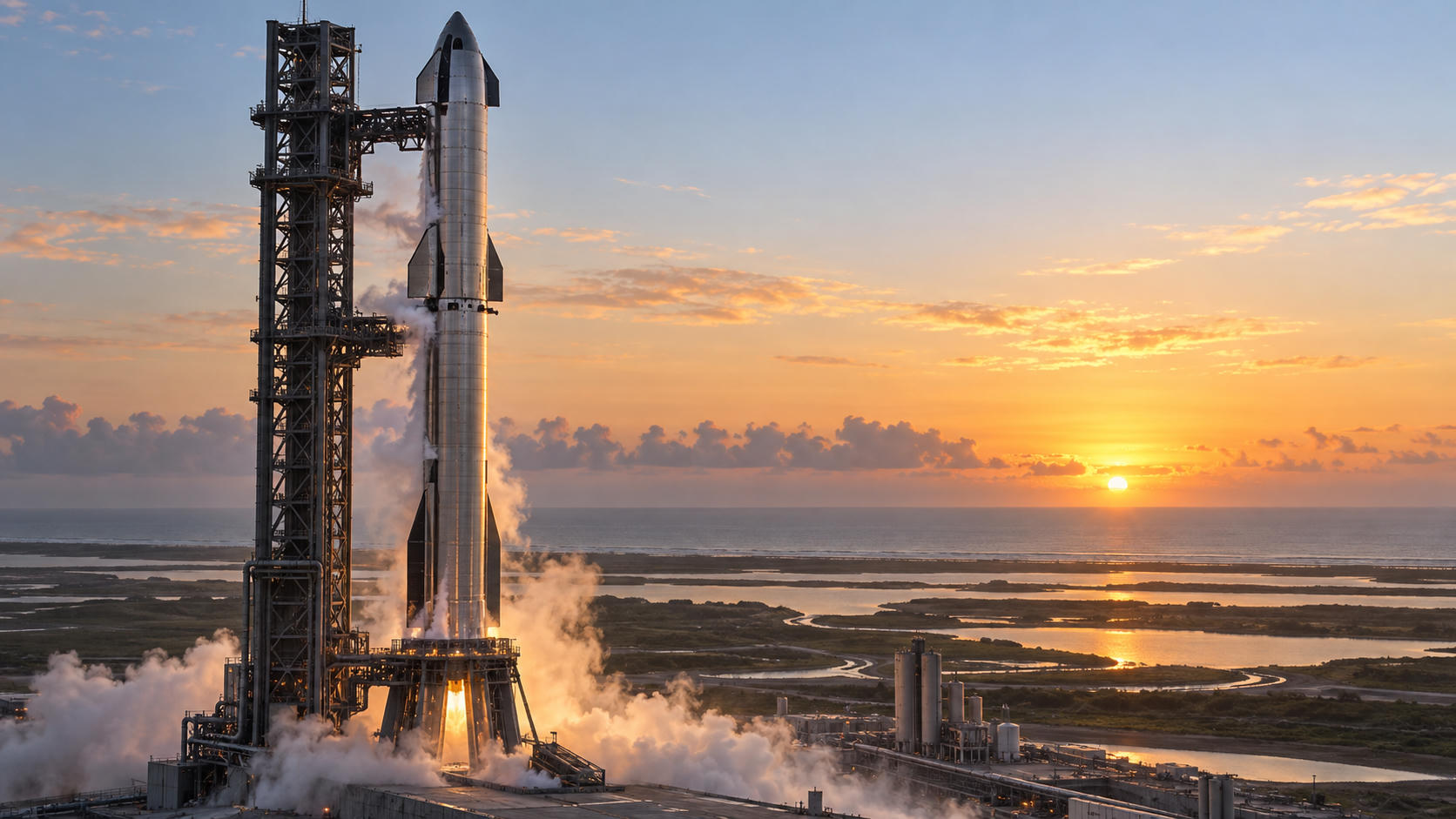
The Starship launch vehicle consists of two distinct stages: the Super Heavy first-stage booster and the Starship upper-stage spacecraft. Standing approximately 120 meters (394 feet) tall with a 9-meter (30-foot) diameter, the fully stacked rocket is constructed primarily from 304L stainless steel rather than carbon fiber or traditional aerospace aluminum-lithium alloys. Stainless steel delivers structural integrity under cryogenic conditions, withstands atmospheric reentry temperatures with minimal thermal degradation, and reduces manufacturing costs.
The vehicle architecture targets complete reusability for both stages. Unlike legacy launch vehicles that discard booster hardware and upper stages after single-use deployments, Starship is engineered for direct pad recovery, rapid propellant reloading, and frequent flight turnaround. The architecture aims to place 100 to 150 metric tons into low Earth orbit (LEO) in a fully reusable configuration, significantly reducing the marginal cost per kilogram to orbit.
Historical Milestones Leading to the Orbital Attempt
The path to the first integrated orbital test flight required an iterative series of suborbital prototypes at SpaceX’s Boca Chica, Texas development site. Between late 2020 and mid-2021, SpaceX conducted high-altitude suborbital flight tests utilizing prototypes SN8 through SN15.
+-----------+--------------------+---------------------------------------------------+
| Prototype | Apogee Target      | Outcome & Engineering Lessons                     |
+-----------+--------------------+---------------------------------------------------+
| SN8       | 12.5 km (Dec 2020) | Validated belly-flop; header tank pressure loss.  |
| SN9       | 10 km (Feb 2021)   | Validated flip maneuver; single engine relight.   |
| SN10      | 10 km (Mar 2021)   | Hard touchdown; landing leg lock failure.         |
| SN11      | 10 km (Mar 2021)   | In-flight anomaly during relight in dense fog.    |
| SN15      | 10 km (May 2021)   | Successful ascent, belly-flop, flip, and landing. |
+-----------+--------------------+---------------------------------------------------+
These suborbital prototypes established the viability of the horizontal “belly-flop” descent profile, where four actuated aerodynamic flaps maintain control using atmospheric drag. The tests culminated in the flight of SN15, which introduced structural enhancements and improved engine avionics to complete a controlled landing on the pad. Following SN15, SpaceX halted high-altitude upper-stage tests to focus production and testing on the Super Heavy booster, Stage Zero launch infrastructure, and the full multi-engine launch configuration.
2. Technical Specifications and Launch Infrastructure
Super Heavy Booster and Raptor Engine Matrix
The Super Heavy booster delivers the primary impulse required to lift the integrated stack out of Earth’s gravity well. Standing 69 meters tall, the booster houses 33 Raptor 2 engines arranged in concentric rings: an outer ring of 20 fixed engines, an inner ring of 10 gimballing engines, and a central cluster of 3 gimballing engines.
                      [  3 Center Engines  ]  --> Gimbal / Vector Control
                   [  10 Middle Ring Engines ] --> Gimbal / Throttle Control
                [  20 Outer Ring Engines (Fixed) ] --> Maximum Liftoff Thrust
Raptor 2 operates on a full-flow staged combustion cycle, burning deep-cryogenic liquid methane ($\text{CH}_4$) and liquid oxygen ($\text{LOX}$). The engine operates at combustion chamber pressures exceeding 300 bar, delivering approximately 230 metric tons of force (2.25 MN / 510,000 lbf) per unit. At maximum throttle, the combined 33-engine array produces roughly 16.7 million pounds (74.3 MN) of thrust—more than double the power of the Apollo-era Saturn V and nearly double the NASA Space Launch System (SLS) Block 1.
The upper-stage Starship contains six Raptor engines: three sea-level engines featuring wide-range gimbaling for terminal landing maneuvers, and three vacuum-optimized Raptor (RVac) engines equipped with expanded regenerative nozzles to maximize specific impulse ($I_{sp}$) in the space environment. Stage separation mechanics rely on hot-staging rings or pneumatic pushers combined with booster deceleration to separate the upper stage cleanly at high dynamic pressure.
Starbase Facilities and “Stage Zero” Systems
SpaceX refers to its ground support infrastructure at Starbase as “Stage Zero,” recognizing that ground hardware matches the complexity of the flight vehicle. Stage Zero consists of the Orbital Launch Mount (OLM), the propellant tank farm, and the 146-meter-tall (480-foot) Integration and Launch Tower.
- Orbital Launch Mount (OLM): Elevated launch table equipped with 20 hold-down clamps, dedicated pneumatic quick-disconnect interfaces, and a high-flow water deluge suppression system to mitigate severe acoustic and vibrational energy at ignition.
- Cryogenic Tank Farm: Stores thousands of metric tons of sub-cooled liquid methane, liquid oxygen, and gaseous nitrogen to load both stages simultaneously within 45 minutes of scheduled liftoff.
- Mechanical Tower Arms (“Mechazilla”): A pair of cable-driven mechanical arms mounted to the launch tower. The arms provide vertical vehicle integration, hold-down stabilization during stacking, and will execute mid-air catches of the returning Super Heavy booster and Starship upper stage on subsequent operational missions.
3. Flight Profile and Mission Milestones
[Liftoff: Starbase] ---> [Max Q] ---> [MECO & Hot Stage] ---> [Booster Flip/Burn] ---> [Gulf of Mexico Splashdown]
                                              \
                                               ---> [Upper Stage 2nd Burn] ---> [Coast across Straits of Florida] ---> [Pacific Ocean Reentry] ---> [Kauai Splashdown]
Launch, Ascent, and Stage Separation Timeline
- Ignition and Liftoff ($T+00:00$): 33 Raptor engines ignite sequentially at the Orbital Launch Mount. The stack clears the tower within six seconds.
- Maximum Aerodynamic Pressure ($T+00:55$ to $T+01:15$): The vehicle experiences peak mechanical stress (Max Q) as it accelerates through the transonic regime.
- Main Engine Cut-Off (MECO) and Stage Separation ($T+02:40$ to $T+02:45$): The Super Heavy booster shuts down the majority of its engines, leaving the central cluster operational. The upper-stage engines ignite while still attached or during release to maintain continuous forward acceleration.
- Starship Upper-Stage Insertion ($T+02:50$ to $T+09:30$): Starship’s six Raptor engines burn until the spacecraft reaches a targeted orbital-equivalent velocity of roughly $27,000 \text{ km/h}$ ($7.5 \text{ km/s}$).
Booster Re-Entry and Water Impact in the Gulf of Mexico
Following stage separation, the Super Heavy booster executes a flip maneuver via cold-gas thrusters and central engine gimbaling:
- Boostback Burn: The inner cluster of Raptor engines reignites to reverse the booster’s horizontal trajectory, targeting a recovery point approximately 30 kilometers off the southern Texas coast.
- Atmospheric Entry: The booster descends through the upper atmosphere unshielded by thermal tiles, relying on four actuated titanium/steel grid fins for pitch, yaw, and roll stabilization.
- Landing Burn and Splashdown: The central engine array fires for a final deceleration burn, slowing the booster to a near-hover above the ocean surface before completing a controlled, non-recoverable soft splashdown in the Gulf of Mexico.
Upper Stage Coast Phase and Pacific Splashdown
The upper-stage Starship does not enter a permanent circular orbit for its initial test flight. Instead, it enters a high transatmospheric ballistic trajectory with a low perigee:
- Transatmospheric Coast: The vehicle coasts across the Straits of Florida, the Atlantic Ocean, southern Africa, and the Indian Ocean.
- Re-Entry Interface: Starship reenters the atmosphere over the Pacific Ocean at hypersonic speeds (Mach 25+). Thousands of hexagonal ceramic heat-shield tiles protect the windward side of the stainless-steel hull from temperatures approaching $1,400^\circ\text{C}$ ($2,550^\circ\text{F}$).
- Targeted Terminal Phase: Starship utilizes its forward and aft flaps to control its descent angle. The flight profile concludes with a high-drag belly-flop and targeted impact in the Pacific Ocean, approximately 100 kilometers northwest of Kauai, Hawaii. No recovery of the primary upper-stage hull is scheduled for this initial flight.
4. Regulatory, Environmental, and Safety Clearances
FAA Launch Licensing Process
The Federal Aviation Administration (FAA) Office of Commercial Space Transportation exercises regulatory authority over all commercial space launches in the United States. To secure the orbital flight license for Starbase, SpaceX had to comply with:
+------------------------------+--------------------------------------------------------------+
| Regulatory Component         | Operational Requirement                                      |
+------------------------------+--------------------------------------------------------------+
| Programmatic Env. Assessment | Resolution of over 75 distinct environmental mitigation items|
| Public Safety Criteria       | Verified hazard zones, debris containment, evacuated airspace|
| Autonomous Flight Safety     | Dual-redundant Autonomous Flight Termination System (AFTS)   |
| Inter-Agency Coordination    | Real-time trajectory sharing with US Coast Guard and USSF    |
+------------------------------+--------------------------------------------------------------+
SpaceX completed structural pressure testing, static engine firings, and verified failure-mode containment protocols before receiving official sign-off on the orbital flight license.
Environmental Mitigation Measures at Boca Chica
SpaceX implemented engineering solutions to satisfy environmental concerns regarding the sensitive coastal ecosystem of the Lower Rio Grande Valley:
- Sound and Shockwave Suppression: Installed a multi-megawatt water-injection deluge system beneath the launch ring to absorb kinetic energy and acoustic resonance during static firings and launches.
- Biological Monitoring: Instituted protocols to monitor local bird and wildlife habitats before and after static engine tests.
- Structural Containment: Expanded concrete apron barriers and reinforced stormwater detention basins to intercept industrial runoff and debris containment fields.
5. Strategic Significance for Global Space Exploration
Role in NASA’s Artemis Lunar Program
Under NASA’s NextSTEP-2 Appendix H and Option B contracts, the agency selected Starship as the Human Landing System (HLS) for the Artemis III and Artemis IV missions.
                                    +------------------------------+
                                    |    NASA Orion Spacecraft     |
                                    +------------------------------+
                                                   |
                                            (Lunar Orbit)
                                                   |
                                                   v
+-------------------------------+       +------------------------------+
| SpaceX Starship Propellant    | ----> |   Starship Human Landing     | ----> [Lunar Surface]
| Depot & Tanker Infrastructure |       |         System (HLS)         |
+-------------------------------+       +------------------------------+
Starship HLS serves as the crewed vehicle that transports astronauts from lunar orbit (rendezvousing with Orion or the Lunar Gateway) to the lunar South Pole and back. The orbital test flight represents the core baseline required to prove that the heavy-lift stack can ascend safely, maintain telemetry, and validate the primary flight systems necessary for the downstream Artemis manifest.
Mars Mission Feasibility and Deep Space Transport
Achieving a sustainable human presence on Mars requires the continuous transport of thousands of tons of cargo. The Starship architecture implements on-orbit cryogenic propellant transfer to accomplish this:
- Multiple Starship tanker variants launch into LEO to deposit liquid methane and liquid oxygen into a centralized orbital propellant depot.
- The deep-space Starship spacecraft docks with the depot, replenishes its tanks in microgravity, and executes a trans-Mars injection burn with a full payload bay.
- The use of methane enables in-situ resource utilization (ISRU) on the Martian surface via the Sabatier reaction ($\text{CO}_2 + 4\text{H}_2 \rightarrow \text{CH}_4 + 2\text{H}_2\text{O}$), allowing return flights without transporting return fuel from Earth.
Commercial Satellite Market Disruption
The operational deployment of Starship will alter the economics of orbital satellite deployment:
- Starlink Generation 2: Starship’s expansive payload bay ($8 \text{ m} \times 17 \text{ m}$ usable volume) enables the mass deployment of larger, heavier Starlink v2.0 satellites equipped with direct-to-cellular phased array antennas.
- Super-Heavy Scientific Payloads: The 100+ ton payload capacity eliminates standard volume and mass trade-offs for scientific institutions, enabling monolithic space telescopes with primary mirrors far larger than the James Webb Space Telescope (JWST) to be launched without complex origami deployment mechanisms.
- Commercial Space Stations: Heavy-lift capability enables the launch of outsized, single-module commercial space station habitats, reducing orbital assembly timelines and structural risk.
6. Frequently Asked Questions (FAQ)
What is the primary objective of the first Starship orbital test flight?
The objective is to validate full-stack structural integrity, 33-engine ignition dynamics, stage separation at altitude, upper-stage guidance into a transatmospheric trajectory, and reentry thermal performance. Payload delivery and mechanical recovery are not mission requirements for the first orbital attempt.
Where will the orbital test launch take place?
The mission launches from the SpaceX Starbase launch complex located at Boca Chica Beach near Brownsville, Texas.
How does Starship compare in power to NASA’s Space Launch System (SLS) and the Saturn V?
Starship generates approximately 16.7 million pounds (74.3 MN) of thrust at liftoff. This output exceeds the Apollo program’s Saturn V (7.5 million pounds / 33.3 MN) and the NASA SLS Block 1 (8.8 million pounds / 39.1 MN), making Starship the most powerful rocket to ever fly.
Will SpaceX attempt to catch the booster on the first flight?
No. The primary booster will execute a controlled descent and soft-touchdown burn over the water in the Gulf of Mexico. Catch operations via the launch tower’s mechanical arms will only be attempted after booster precision guidance is fully demonstrated.
What fuel does the Starship rocket use?
Starship runs on deep-cryogenic liquid methane ($\text{CH}_4$) as its fuel and liquid oxygen ($\text{LOX}$) as its oxidizer (collectively known as Methalox). This mixture was selected to minimize engine carbon coking, optimize combustion efficiency at high chamber pressures, and enable fuel synthesis on Mars.