The Decline of Bulky VR Headsets for Spatial Tech
VR Headsets Are Cooked: The Collapse of Bulky HMDs and the Shift to Ambient Spatial Computing
Introduction: The State of the VR Market Crisis
The consumer virtual reality market faces structural decline. Market analysis and tech industry reporting confirm that head-mounted displays (HMDs) struggle with high post-purchase abandonment and decelerating sales volumes Source 3. The surge in consumer interest seen during earlier hardware cycles has failed to convert into sustained daily active usage.
Hardware manufacturers built the initial growth phase of consumer VR on speculative utility and immersion metrics. Early adopters purchased enclosed headsets for gaming and simulated workplace environments. Long-term retention metrics reveal a persistent pattern: users store their hardware in closets after initial novelty phases expire. The fundamental friction points remain unresolved across successive hardware generations.
Consumer Purchase -> Novelty Phase (Weeks 1-4) -> Ergonomic/Utility Friction -> Device Abandonment
The core failure stems from hardware architecture. Heavy, enclosed facial visors create physical discomfort, require complex boundary configurations, and isolate users from physical workspaces. Consumers reject closed HMD form factors in favor of lightweight, ambient spatial computing alternatives. Ergonomics, prohibitive pricing structures, ecosystem fragmentation, and missing software utility have rendered traditional VR headsets obsolete for general consumer computing.
1. The Ergonomic Barrier: Why Users Abandon Bulky HMDs
Traditional HMD (500g - 650g)        Smart Glasses / Spatial Frames (70g - 110g)
┌─────────────────────────────┐       ┌─────────────────────────────┐
│  [Enclosed Facial Gasket]   │       │     [Open Frame Design]     │
│  - Front-heavy cantilever   │  vs   │  - Distributed frame weight │
│  - Thermal accumulation     │       │  - Zero facial seal heat    │
│  - Total visual isolation   │       │  - Unbroken peripheral view │
└─────────────────────────────┘       └─────────────────────────────┘
Friction in Daily Workflow
Traditional HMD architectures position display panels, compute modules, cooling fans, and multi-lens optical stacks directly against the user’s forehead and cheekbones. A device weighing between 500 and 650 grams exerts continuous cantilever torque on cervical spine muscles and facial soft tissues. Extended sessions cause:
- Focal fatigue from fixed accommodation-vergence mismatches.
- Skin irritation and thermal accumulation under sealed gaskets.
- Cervical strain from leveraged front-heavy mass distributions.
For technical professionals and software developers, the physical format disrupts core productivity cycles. Developers do not operate exclusively inside spatial interfaces; they alternate between code editors, physical keyboards, dual reference monitors, physical notebooks, and local hardware testbeds. Putting on and removing a tethered or heavy wireless headset interrupts cognitive focus Source 1. Pass-through video feeds introduce optical distortion, motion latency, and resolution degradation, failing to replace direct human vision for multi-monitor desktop tasks.
The Rise of Lightweight Smart Glasses
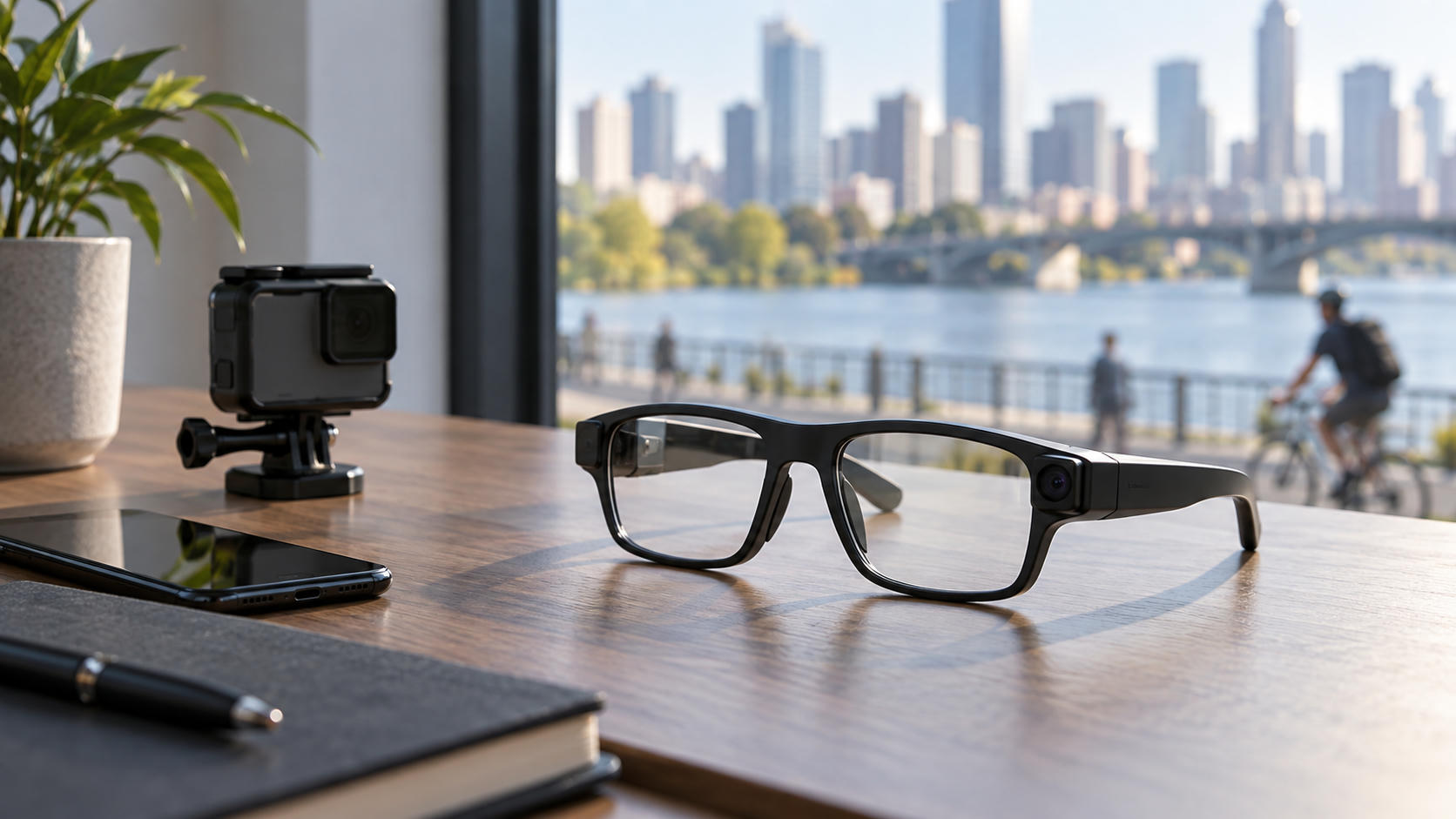
Hardware developers are abandoning enclosed form factors for lightweight smart glasses and waveguide optics Source 1. By offloading primary compute to pocket companion devices, tethered compute pucks, or distributed wireless architectures, manufacturers reduce optical frame weight to under 100 grams.
┌───────────────────────────────┐
│     Eyewear Optics / HUD      │  <-- Mass reduced to <100g
└──────────────┬────────────────┘
               │ (Low-latency link)
┌──────────────▼────────────────┐
│   Compute Puck / Smartphone   │  <-- Thermal mass & battery isolated
└───────────────────────────────┘
Lightweight spatial glasses remove physical gaskets entirely, preserving the user’s peripheral vision. Developers and everyday users maintain uninhibited contact with physical environments while placing floating 2D or basic 3D interfaces within their field of view. This form factor eliminates the mechanical on-and-off cycle that made bulky headsets impractical for standard workdays Source 1.
2. The Price-to-Utility Disconnect
Prohibitive Pricing at the High End
The consumer VR industry has split into two unsustainable economic tiers: subsidized, commoditized entry-level gaming hardware and high-end spatial computing devices reaching premium price brackets. High-end devices, exemplified by the $3,499 Apple Vision Pro, present a cost barrier that exceeds standard consumer hardware budgets Source 7.
| Device Tier | Average Price Range | Target Audience | Primary Limiting Factor |
|---|---|---|---|
| Consumer Standalone HMD | $300 – $650 | Gaming enthusiasts | Software retention, physical comfort |
| Enthusiast PC-VR | $999 – $1,800 | Simulators, niche VR gamers | External tethering, baseline PC costs |
| Prosumer Spatial HMD | $3,499+ | Early adopters, enterprise | Extreme price, lack of killer apps |
At enterprise price points, consumers demand clear productivity advantages over traditional $1,500 laptop workstations. Bulky spatial headsets fail to replace laptop computers due to text rendering limits, input latency from hand-tracking paradigms, and battery limits under two hours.
Cost vs. Daily Utility Return:
Laptop Workstation: [$1,500] = 8+ hours productivity, full toolchain support, zero physical fatigue.
High-End VR HMD:    [$3,499] = 2 hours battery, neck strain, virtual monitor setup friction [Source 7].
The “Kitchen Timer” Problem: Lack of Killer Apps
The industry suffers from an absence of essential software applications. Marketing campaigns showcase high-resolution micro-OLED panels, eye-tracking arrays, and real-time environment meshing. The actual consumer applications frequently reduce to mundane functions, such as pinning virtual stopwatches and cooking timers over physical stovetops Source 7.
High-fidelity spatial engines cannot sustain consumer interest on minor novelties. Virtual floating windows, oversized movie viewers, and basic spatial widgets do not justify wearing heavy hardware. When core use cases can be executed faster on a smartphone or a standard smart speaker, consumer retention drops.
3. Platform Fragmentation and Anti-Consumer Ecosystems
   [Independent Game/Software Studio]
                  │
     ┌────────────┴────────────┐
     ▼                         ▼
[Legacy Headset Tier]   [Gated New Headset Tier]
- Base Installed User   - Segmented, Smaller User Base
- Deprecated Feature    - Exclusive APIs Required
  Support [Source 5]    - Fragmented Market Returns
Hardware-Gated Software Fragmentation
VR platform operators fragment their customer bases by locking software features and core game iterations behind successive hardware revisions Source 5. Instead of maintaining backwards-compatible, unified platform ecosystems, manufacturers push updates that demand hardware replacements:
- Platform software updates lock foundational social or operating system features to new models Source 5.
- Developers drop support for older headsets to utilize improved processing nodes on newer units.
- Consumers who spent hundreds of dollars find their hardware deprecated within 24 to 36 months.
This upgrade pacing alienates consumers who expect personal computing hardware to maintain baseline software support across longer lifecycles.
Developer Retention and Economic Sustainability
Platform segmentation directly impairs development studio economics. Because the total active VR user base remains divided across multiple proprietary storefronts and hardware generations, studios face small total addressable markets (TAM).
Small Segmented TAM -> Low Unit Sales -> Reduced Software Budgets -> Stagnant App Quality -> Churn
Third-party studios struggle to achieve profitability on major production budgets. Consequently, developers scale back production values, pivot to mobile or flat-screen PC titles, or rely entirely on platform-holder exclusivity buyouts to offset development risks. The result is an application ecosystem saturated with short tech demos, mini-games, and ports, rather than rich, sustained platforms.
4. The Future: From Total Immersion to Ambient Spatial Computing
  Traditional Paradigm                   Emerging Paradigm
┌───────────────────────┐             ┌───────────────────────┐
│   TOTAL IMMERSION     │             │    AMBIENT OVERLAY    │
│  - Fully blind HMD    │             │  - Micro-waveguide    │
│  - Complete sensory   │   ======>   │  - Integrated frames  │
│    isolation          │             │  - Contextual alerts  │
│  - Heavy, stationary  │             │  - High daily wear    │
└───────────────────────┘             └───────────────────────┘
The Strategic Pivot Toward Lightweight Wearables
Major hardware manufacturers are redirecting research and development capital toward ambient, transparent smart glasses and assistive augmented reality form factors Source 1. The technical objective has shifted:
- Environmental Awareness: Preserving the user’s natural field of view without digitizing it through cameras and low-latency pass-through screens.
- Contextual Information Delivery: Prioritizing micro-interactions (navigation directions, notifications, quick AI visual lookups, contextual communications) over constant, 360-degree rendering.
- Form Factor Normalization: Designing frames that resemble standard corrective eyewear, moving thermal loads and battery mass into modular components.
This shift recognizes that users reject sensory isolation for standard daily tasks. The future of consumer spatial computing relies on transparent, low-friction access to digital data that works alongside the physical world.
Enterprise vs. Consumer Divergence
The VR hardware sector is dividing into two distinct markets:
SPATIAL HARDWARE SPECIALIZATION
│
├── Enterprise / Niche Simulation (Bulky HMDs)
│   ├── Surgical instruction and clinical simulation
│   ├── Defense flight and combat trainers
│   └── Industrial digital twin prototyping
│
└── Consumer Everyday Spatial Tech (Smart Glasses & Audio Frames)
    ├── Contextual heads-up displays
    ├── Real-time language translation
    └── Ambient audio and lightweight productivity monitors
Bulky head-mounted displays will remain tools for enterprise training facilities, aviation simulation rigs, and medical institutions where high fidelity justifies weight and isolation. For general consumer computing, gaming, and everyday desktop productivity, the bulky VR helmet has reached its structural limit.
Conclusion: The Sunset of the Traditional Headset Era
Bulky head-mounted displays have reached the end of their consumer adoption cycle Source 3. Physical discomfort, high hardware pricing, fragmented platform stores, and weak consumer applications have limited the format’s mainstream viability Source 5, Source 7. Virtual reality is not disappearing; it is changing form. The industry is leaving behind heavy, isolating helmets to build lightweight, ambient smart glasses that integrate digital utilities directly into daily life Source 1.
Frequently Asked Questions (FAQ)
Why are traditional VR headsets declining in sales?
Consumer demand is falling due to high hardware costs, missing killer software applications, physical discomfort during prolonged use, and platform fragmentation that gates software updates behind newer hardware revisions Source 3, Source 5.
How do smart glasses solve the problems of VR headsets?
Smart glasses remove facial pressure, physical gaskets, and visual isolation Source 1. They use lightweight frames and transparent waveguides, allowing users to maintain peripheral vision and interact with standard physical tools without repeatedly removing hardware Source 1.
Is the Apple Vision Pro considered a commercial failure?
The Apple Vision Pro highlighted the gap between high hardware costs ($3,499) and limited practical use cases Source 7. While technologically advanced, early customer workflows leaned on simple spatial utilities, like floating timers and media viewing, rather than sustained productivity loops Source 7.
Why do VR platforms gate software behind new hardware?
Hardware manufacturers restrict software and feature updates to newer hardware to drive consumer upgrade cycles Source 5. This practice splits developer audiences and frustrates early hardware owners whose devices lose support prematurely Source 5.
Will VR headsets disappear completely?
Traditional enclosed headsets will continue as specialized enterprise tools for industrial assembly, surgical training, defense simulation, and high-end simulation gaming. General consumer spatial computing is transitioning into lightweight smart frames and ambient AR wearables Source 1.